
Tradigital Art Resources | 3D Modelling & Fabrication | James Abell
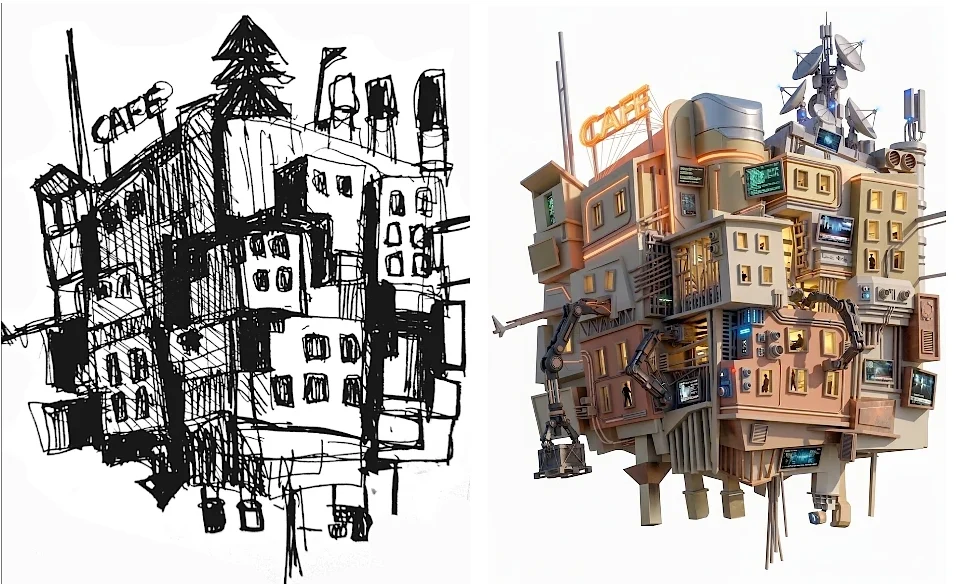
Welcome to the James Abell Art Resource Hub. As a tradigital fine artist and spatial designer, my practice constantly moves between the physical and the digital. Whether you want to build a bulletproof daily sketchbook habit, master spatial design using Blender and 3ds Max, or bridge the gap with digital fabrication, this library is built for contemporary makers. Explore the tools and workflows below, or accelerate your practice with 1-on-1 3D modelling and tradigital art tuition.
1. Traditional Tools & Workflows
The #DrawEveryDay Habit: Mastering Ink & Cross-Hatching
My daily practice relies heavily on ink fineliners and Sharpies to rapidly generate forms. Traditional cross-hatching and stippling are essential for understanding physical lighting and texture before touching a computer.Link: Read: How to Digitize Traditional Ink Sketches
Physical Mold Making & Sculpting
Before 3D printing, understanding physical mass is crucial. I frequently use plaster of Paris and ceramic casting to create tangible, real-world bases that inform my digital meshes.
2. Digital Tools & Software

3D Modelling: Translating Paper to Polygon
I use Blender extensively for hard-surface modelling and 3D print preparation. For complex spatial design and architectural visualization, 3ds Max is my go-to engine.
Interactive Coding & Generative AI
Modern spatial design goes beyond static meshes. I integrate Generative AI (Gemini, Tripo3D) into my ideation phase, and utilize WebGL, HTML5, and Three.js to build interactive 3D experiences.
3. Digital Fabrication Tools
Prepping Models for 3D Printing (FDM & Resin)
Prepping a 3D model for physical output requires ensuring the mesh is watertight. I use both FDM and resin printing to fabricate fine art sculptures and custom spatial prototypes.
CNC Routing & Laser Cutting
For large-scale spatial installations, CNC routers and laser cutters are indispensable for slicing and assembling massive 3D scan data (like my 2020 James Watt statue project).
4. External Resources & Reading List
Recommended YouTube Channels & Tutorials
For self-guided learners, channels like Blender Guru (for foundational 3D techniques), Arrimus 3D (for advanced topology), and Peter Draws (for abstract ink inspiration) are excellent supplements.
Essential Reading for Spatial Designers
To understand the intersection of architecture, art, and world-building, I highly recommend exploring resources on brutalist architecture, parametric design, and my own Kindle publication, How To Create Cities Of The Imagination.
Elevate Your Practice with 1-on-1 Tuition
Self-teaching complex software or digital fabrication workflows can be incredibly frustrating. If you are struggling to translate your traditional art into 3D space, or need to master Blender and 3ds Max for a specific project, personalized guidance is the most efficient way to learn.As a Cambridge CELTA-qualified tutor and a professional tradigital maker, I offer bespoke, 1-on-1 online tuition tailored to your exact creative goals. Whether you are a fine artist digitizing your sculptures or a spatial designer needing advanced workflows, I can help you bridge the gap.[Button Block][ Book 1-on-1 3D & Art Tuition ] (Link to your Tuition Landing Page)
Frequently Asked Questions
(Use a WordPress Accordion/Toggle block here if you have one. AI search engines love this format).
What is tradigital art?
Tradigital art is a creative workflow that actively combines traditional, physical art mediums (like ink drawing and physical sculpting) with digital tools (like 3D modelling, WebGL coding, and CNC fabrication) to create contemporary fine art.
Do I need traditional drawing skills to learn 3D modelling?
While traditional drawing skills (such as an understanding of perspective and composition) are highly beneficial for spatial design, they are not required to learn the technical interface of software like Blender or 3ds Max. My 1-on-1 tuition covers both the artistic eye and the technical toolset.